
Summary
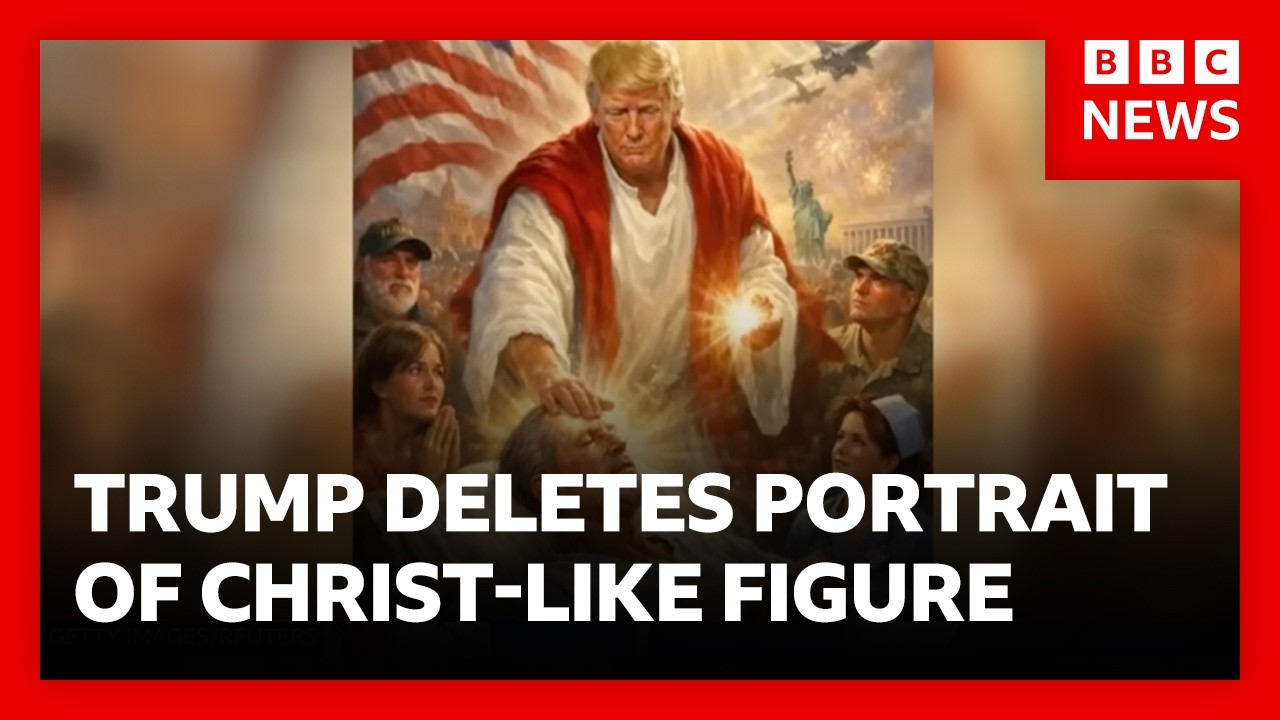
Former President **Donald Trump** ignited a firestorm by posting an image depicting himself in a manner reminiscent of Jesus Christ, complete with a halo and robes. The image, which circulated widely on social media, drew immediate criticism and accusations of blasphemy and megalomania. Trump's campaign has since attempted to distance themselves from the image, with spokespeople claiming it was a fan-generated meme that was shared without full vetting, a narrative that has been met with skepticism by many observers. This incident highlights the ongoing tension between Trump's unconventional digital communication style and the expectations of political decorum, particularly when touching on religious iconography. The controversy underscores the power of social media to amplify both political messaging and potential missteps, forcing rapid responses and damage control. The image, which appeared to be a digitally altered photograph, showed Trump with a halo and a robe similar to those often depicted in religious art of Jesus. The context of its initial posting and subsequent explanation has become a focal point of the debate, with critics questioning the intent behind sharing such a potent symbol and supporters often defending it as a harmless, albeit provocative, piece of digital art. The incident serves as a case study in the rapid dissemination of imagery in the digital age and the challenges political figures face in controlling their online narrative, especially when it ventures into sensitive territory like religious symbolism. This event continues to fuel discussions about the intersection of politics, religion, and social media in contemporary American discourse.
Key Takeaways
- Donald Trump posted a controversial image of himself as Jesus Christ.
- The Trump campaign attributed the image to an unvetted fan meme.
- The incident sparked widespread criticism and debate over religious symbolism in politics.
- The controversy underscores the challenges of managing online narratives for political figures.
- The event highlights the intersection of religion, politics, and social media in the US.
Balanced Perspective
The image of Donald Trump depicted as Jesus Christ was posted on his Truth Social platform and subsequently shared across other social media channels. While the Trump campaign has stated the image was a fan-made meme shared without proper vetting, the exact origin and intent remain subjects of discussion. The visual representation, featuring a halo and robes commonly associated with Jesus, immediately drew varied reactions, ranging from outrage to amusement. This incident falls within a pattern of Trump's use of provocative imagery and unconventional communication strategies on social media, which often generate significant public and media attention, necessitating subsequent clarification or retraction from his team.
Optimistic View
From a campaign perspective, this could be seen as a bold, albeit risky, attempt to galvanize a passionate base that views Trump as a divinely appointed figure. The controversy itself generates significant media attention, keeping Trump in the news cycle and potentially reinforcing his image as an outsider willing to defy conventional norms. Supporters might interpret the image as a powerful symbol of Trump's perceived martyrdom and his fight against perceived enemies, resonating deeply with their faith-based political convictions. The ensuing debate, while negative for some, could solidify loyalty among core followers who see it as a testament to his unique connection with them.
Critical View
This incident represents a significant miscalculation, potentially alienating moderate voters and alienating religious groups who find the appropriation of religious imagery deeply offensive. The explanation that it was an unvetted fan meme strains credulity for many, suggesting either a lack of control over his own platform or a deliberate, albeit poorly executed, attempt to court a specific religious demographic. The controversy risks overshadowing substantive policy discussions and reinforcing negative perceptions of Trump as attention-seeking and lacking in judgment, particularly when dealing with sacred symbols. This could prove to be a costly error in a closely contested election cycle, particularly among undecided voters who value decorum and respect for religious traditions.
Source
Originally reported by The New York Times